
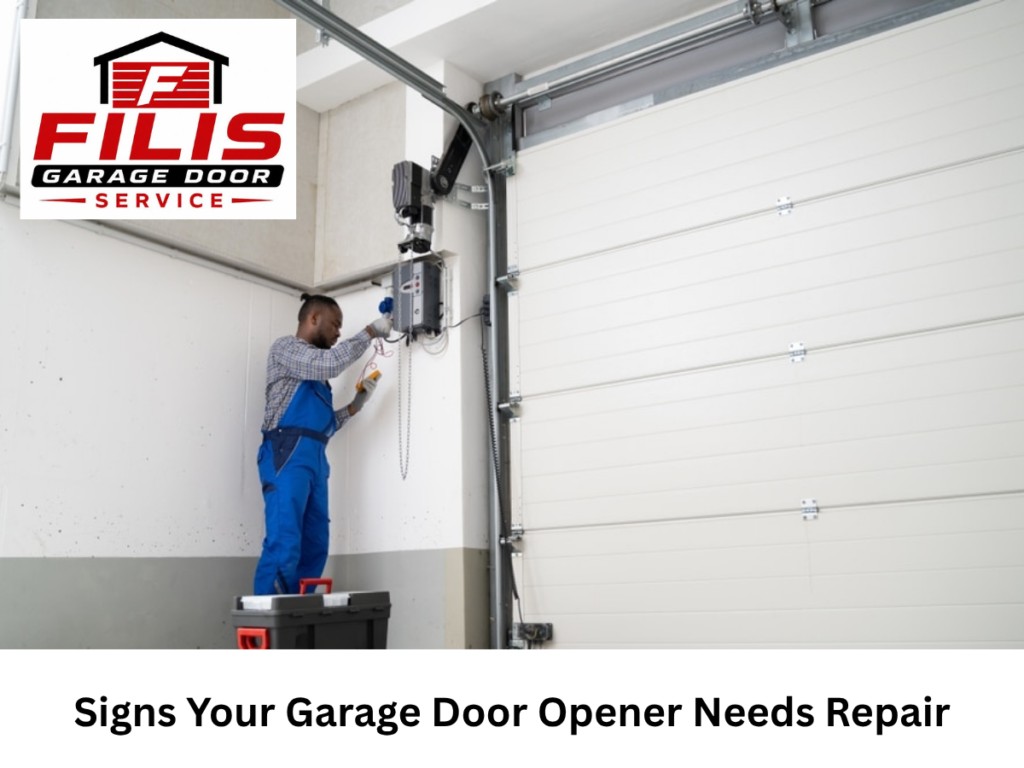
Your garage door opener is one of those household systems you probably do not think about until something goes wrong. With the push of a button, the opener should lift and close your garage door smoothly, quietly, and safely. When it starts making unusual noises, responding slowly, or failing to operate consistently, those changes should not be ignored.
A faulty opener can become more than an inconvenience. Since the opener controls the movement of a heavy garage door, a mechanical or electrical problem can affect the door’s safety and reliability. A small issue that is addressed early may also prevent a more expensive repair later.
Many homeowners are unsure whether a strange sound or delayed response is normal wear or a sign that professional service is needed. Knowing the warning signs can help you make the right decision before the problem leaves you unable to open your garage or creates a safety concern.
Filis Garage Door helps homeowners with garage door opener installation and repair, along with other important garage door services. If your opener is showing signs of trouble, understanding the symptoms is the first step toward getting the right solution.
1. Your Garage Door Does Not Respond to the Remote
One of the most obvious signs of an opener problem is when the garage door does not respond when you press the remote control.
Before assuming that the opener itself has failed, check a few simple things. The remote may have a weak battery, the opener may not have power, or the remote may have lost its connection with the opener. If changing the battery and checking the power source does not solve the problem, the opener may require professional inspection.
Another important clue is inconsistent operation. If the door works sometimes but refuses to respond at other times, there could be an electrical problem, a damaged receiver, or another component beginning to fail.
Check the Wall Button
Try operating the door with the wall-mounted control. If the wall button works but the remote does not, the problem may be related to the remote or its connection with the opener.
If neither the remote nor the wall control operates the door, the issue may be inside the opener or connected to its power supply.
Avoid repeatedly pressing the buttons in an attempt to force the opener to work. If there is an underlying mechanical or electrical issue, repeated attempts may not solve the problem and could make troubleshooting more difficult.
2. The Opener Makes Unusual or Loud Noises
Garage door openers make some noise during normal operation. However, a sudden change in sound should get your attention, as it may be one of the common Garage Door Opener Problems homeowners experience.
Grinding, clicking, rattling, buzzing, or squealing sounds can indicate that something is not operating properly. The cause could range from worn components to a problem with the opener’s internal mechanism.
For example, a grinding sound may indicate that gears or other moving parts are wearing down. A persistent clicking sound could point to an electrical or mechanical issue. A loud buzzing sound without normal door movement may also indicate that the opener is working but cannot properly move the door.
Do not assume that adding lubricant will fix every unusual noise. Some parts of a garage door system require professional inspection, especially when the noise comes directly from the opener.
Why New Sounds Matter
A garage door opener can gradually become louder as components wear. Homeowners sometimes get used to the noise and continue using the system because the door still opens and closes.
That can be a mistake.
A new or increasingly loud sound can be an early warning that a component is wearing out. Having the system checked while the door is still functioning may help prevent a complete failure.
3. The Garage Door Opens Slowly or Stops
A garage door should move at a steady and controlled speed. If it suddenly becomes slow, stops partway, or struggles to complete its cycle, there may be a problem that needs attention.
However, the opener is not always responsible for slow movement. Garage doors contain several components that work together, including springs, tracks, rollers, cables, and drums. A problem with one of these components can place extra strain on the opener.
This is why it is important to have the entire system inspected rather than replacing the opener immediately.
For example, worn rollers can make the door harder to move. Damaged or misaligned tracks can also create resistance. If the opener has to work harder than normal to move the door, continued use may put additional stress on its motor and internal components.
Filis Garage Door Services provides repair services for garage door openers as well as other garage door components. A professional can determine whether the opener is actually the source of the problem or whether another part of the system is affecting its performance.
4. The Garage Door Reverses Unexpectedly
Modern garage door openers are equipped with safety features designed to prevent the door from closing when an obstruction is detected. If your door starts closing and then suddenly reverses, do not ignore it.
First, check whether anything is blocking the door’s path. Also inspect the safety sensors near the bottom of the garage door opening. Dirt, accidental movement, or an alignment problem can interfere with sensor operation.
If the sensors appear clean and properly positioned but the door continues reversing, the opener may need professional attention.
Safety Sensors Should Not Be Ignored
Safety sensors are an important part of the garage door system. They help prevent the door from closing when something is in its path.
Never bypass or disable a safety feature simply because it is causing the door to reverse. Doing so can create a serious safety risk.
If the sensors are functioning correctly and the problem continues, the issue could involve the opener’s settings, wiring, travel limits, or another component. A qualified garage door technician can identify the cause and make the appropriate repair.
5. The Opener Runs but the Door Does Not Move
Another common warning sign occurs when you hear the opener running but the garage door remains in place.
This situation can happen for several reasons. The opener may have a mechanical problem, or another part of the garage door system may have failed.
For instance, a damaged spring can prevent the door from moving correctly. A disconnected component can also stop the opener from transferring movement to the door.
Do Not Try to Repair Springs Yourself
Garage door springs are under significant tension. Attempting to remove, adjust, or replace one without the proper training and equipment can result in serious injury.
If the opener is running but the door does not move, stop operating the system and arrange for a professional inspection. A technician can determine whether the opener, spring system, or another component needs repair.
This is especially important if the door appears uneven, feels unusually heavy, or makes a loud noise before stopping.
6. The Opener Works Intermittently
An opener that works one day and fails the next can be particularly frustrating. Intermittent problems are also easy to overlook because the system may appear to fix itself.
Unfortunately, temporary operation does not necessarily mean the problem has disappeared.
Electrical connections, sensors, remotes, circuit boards, and other components can develop intermittent faults. Environmental conditions and normal wear may also contribute to inconsistent operation.
If you notice a pattern, pay attention to when the problem occurs. Does the opener fail only after repeated use? Does the remote work from some locations but not others? Does the wall control work when the remote does not?
These details can help a technician identify the problem more efficiently.
7. The Opener Is Several Years Old and Showing Multiple Problems
Age alone does not always mean an opener needs to be replaced. A well maintained system can provide reliable service for many years.
However, an older opener that begins experiencing several problems at once deserves professional evaluation.
For example, you might notice that the opener is louder than before, the remote works inconsistently, and the door takes longer to open. Each issue might seem minor on its own, but together they can indicate that the system is reaching the end of its useful service life.
A technician can determine whether repairing the existing opener makes sense or whether replacement would be a better long term option.
Repair or Replacement
Repair is often appropriate when the problem involves a replaceable component and the rest of the system remains in good condition.
Replacement may make more sense when the opener has repeated failures, outdated safety features, or extensive internal damage. The right choice depends on the condition of the equipment, the type of problem, and the cost of continued repairs.
A professional evaluation can help you avoid spending money on unnecessary replacement while also preventing repeated repairs on an opener that is no longer dependable.
How to Prevent Garage Door Opener Problems
Regular attention can help you identify problems before they become major repairs.
Start by observing how your garage door operates. Listen for unusual sounds and watch whether the door moves smoothly. Check the safety sensors and make sure nothing is blocking the door’s path.
Keep the area around the opener clean and avoid hanging items from the opener or its components. You should also avoid attempting repairs involving springs, cables, electrical components, or other high tension parts unless you have the proper training.
Professional maintenance can also help identify worn components before they cause a complete failure.
Remember that the opener and the garage door work as one system. Keeping the tracks, rollers, drums, springs, and other components in good condition can help reduce unnecessary strain on the opener.
When Should You Call a Garage Door Professional?
Some basic checks are safe for homeowners, such as replacing a remote battery, checking the power supply, and making sure the sensor area is clear.
More complicated problems should be handled by a qualified garage door professional. Contact a professional if the opener repeatedly fails, the door becomes unusually heavy, the system makes loud grinding or popping sounds, the door reverses unexpectedly, or the opener runs without moving the door.
You should also seek professional service if you notice damaged springs, cables, tracks, or other major components.
Filis Garage Door Services can help homeowners identify problems with their garage door systems and provide professional garage door opener repair and related services. Addressing a problem early can help restore reliable operation and reduce the chance of a more serious breakdown.
Conclusion
Your garage door opener plays an important role in the daily convenience and safe operation of your garage. Strange noises, slow movement, inconsistent operation, unexpected reversing, and failure to respond are all signs that something may need attention.
Ignoring these symptoms can allow a minor issue to become a larger and more expensive problem. It can also place additional strain on other garage door components.
If your opener is showing any of these warning signs, consider having the system professionally inspected. Filis Garage Door provides garage door opener installation and repair along with other garage door services to help homeowners keep their garage doors operating properly. Getting professional help at the first sign of trouble can save time, reduce inconvenience, and help keep your garage door system dependable.
Frequently Asked Questions
How do I know if my garage door opener needs repair?
Common signs include unusual noises, delayed operation, intermittent performance, failure to respond to controls, unexpected reversing, and an opener that runs without moving the door. A professional inspection can determine the exact cause.
Why does my garage door opener make a clicking noise?
A clicking noise can have several causes, including an electrical issue, worn internal components, or a problem with another part of the system. If the sound is new or persistent, professional inspection is recommended.
Why does my garage door open slowly?
Slow movement may be caused by the opener, but it can also result from worn rollers, damaged tracks, spring problems, or other mechanical issues. The complete garage door system should be checked before assuming the opener needs replacement.
Why does my garage door close and then open again?
The safety sensors may be dirty, blocked, or misaligned. There may also be an issue with the opener’s settings or another component. Do not disable the safety sensors to stop the door from reversing.
Can I repair my garage door opener myself?
Simple tasks such as replacing a remote battery can usually be handled by a homeowner. Electrical repairs, internal opener repairs, spring work, cable repairs, and other complicated work should be left to a trained professional.