
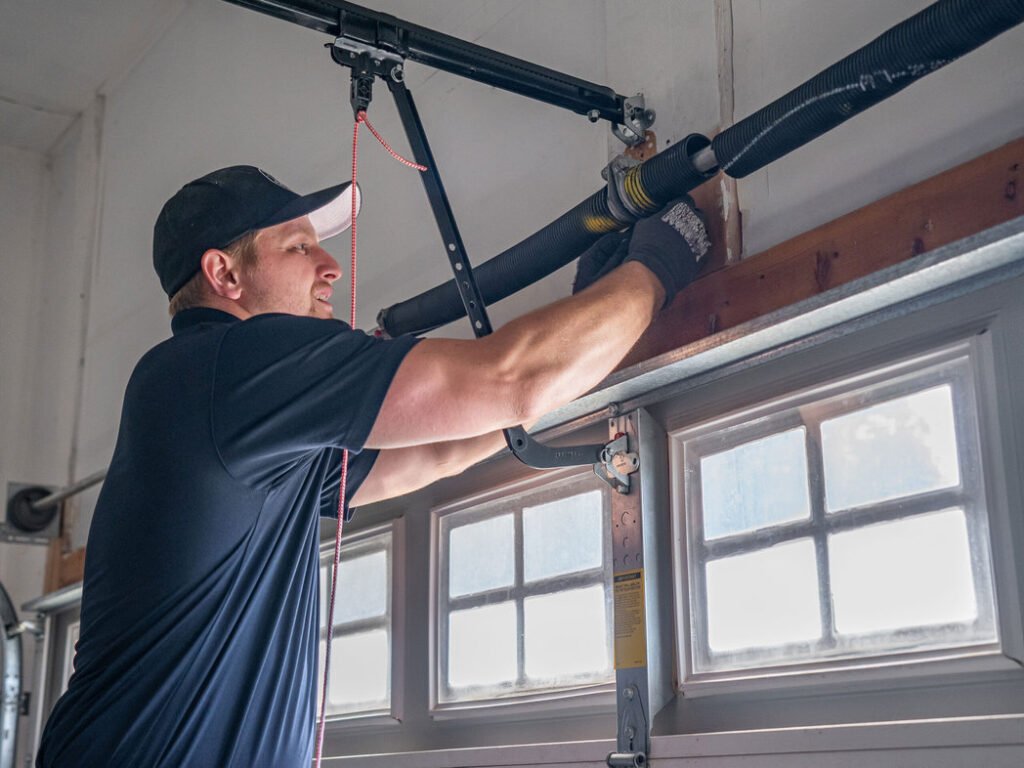
You press the garage door remote, wait for the usual sound, and… nothing. Or maybe the opener starts running, but the door barely moves before stopping. A garage door opener can stop working for several reasons, and the opener itself is not always the problem.
Some issues are simple, such as a dead remote battery or a blocked safety sensor. Others, including broken springs, damaged gears, electrical problems, or worn-out opener parts, need professional attention.
Before you assume you need a new opener, here are some common reasons your garage door opener may not be working and a few things you can safely check.
Why Is My Garage Door Opener Not Working?
A garage door opener is part of a larger system. The opener, springs, tracks, rollers, cables, sensors, remote, and door all need to work together.
Common problems include:
- Dead remote batteries
- Power or circuit problems
- Dirty or misaligned safety sensors
- A disconnected trolley
- Broken or worn garage door springs
- Damaged tracks or rollers
- Worn gears inside the opener
- Travel limit or control problems
- A failing motor or electrical component
The sound your opener makes and what the door does—or doesn’t do—can often give you a useful clue.
1. Check the Power to the Opener
If nothing happens when you press the wall button or remote, start with the basics.
Make sure the opener is plugged into the outlet and check whether the outlet has power. If there has recently been a power outage, check the appropriate breaker as well.
If the opener has lights but does not respond to either the remote or wall control, there may be an issue with the opener’s internal components or controls.
Do not remove the opener cover or attempt electrical repairs yourself. Garage door openers contain electrical parts that can be dangerous to handle without the right experience.
2. Replace the Remote Battery
Sometimes the garage door itself is perfectly fine—the remote simply needs a new battery.
If the wall-mounted button opens the door but the remote does not, replace the remote battery first. You can also check whether the remote needs to be reprogrammed.
If a fresh battery does not help, the problem could involve the remote, receiver, wiring, or another part of the opener system.
3. Check the Safety Sensors
Safety sensors are small devices positioned near the bottom of the garage door tracks. They communicate with each other using an invisible beam. If that beam is interrupted, the opener may refuse to close the door.
Look at both sensors and check for:
- Dirt or cobwebs covering the lenses
- Objects blocking the sensor beam
- Sensors that are no longer facing each other
- Loose or damaged wiring
- Sensor lights that are not behaving normally
You can gently clean the sensor lenses and make sure nothing is blocking them.
A small bump from a box, trash can, bicycle, or other object can sometimes knock a sensor out of position.
4. Check the Emergency Release
If you hear the opener running but the garage door stays where it is, check whether the door has been disconnected from the opener trolley.
The emergency release cord allows the door to be operated manually. It can sometimes be pulled accidentally, leaving the opener running without actually moving the door.
If the trolley has become disconnected, follow the manufacturer’s instructions for reconnecting it.
If you are unsure how the mechanism works, it is better to have a professional inspect it rather than forcing anything.
5. Look for Signs of a Broken Garage Door Spring
A garage door opener may appear to be the problem when the real issue is a broken or worn spring.
The springs help balance the weight of the garage door. When one breaks or loses its tension, the opener may struggle to lift the door or stop after moving only a few inches.
Possible signs include:
- The door suddenly feels very heavy
- The opener strains or makes unusual noises
- The door opens only a few inches
- You hear a loud bang from the garage
- A visible gap appears in a spring
Garage door springs are under significant tension. Do not attempt to remove, adjust, or replace a spring yourself. A mistake can cause serious injury.
Filis Garage Door Services provides garage door spring repair and replacement along with opener repair services, so a professional can determine whether the problem is actually the spring rather than the opener.
6. Check the Tracks and Rollers
Your opener may be working properly while the door itself is struggling to move.
Bent or misaligned tracks, damaged rollers, or other mechanical problems can make the door difficult to open. You may hear grinding, scraping, or popping sounds while the door moves.
Look for obvious obstructions around the tracks, but don’t try to bend a track back into position yourself.
If the door looks crooked, gets stuck, or makes unusual noises, have the system inspected. Continuing to run the opener against a mechanical problem can put extra strain on the motor and other components.
7. The Motor Runs, but the Door Does Not Move
What if you can hear the opener motor running, but the garage door stays still?
One possibility is a disconnected trolley. Another is a worn or damaged gear inside the opener.
The opener motor can continue making noise even when an internal gear is no longer transferring that movement to the door.
If the opener hums, grinds, or runs without moving the door, avoid repeatedly pressing the button. Running a faulty opener over and over may make the problem worse.
8. Check If the Door Stops at the Wrong Position
A garage door opener uses travel settings to know how far the door should open and close.
If the door stops too early, opens farther than it should, or behaves differently from one cycle to another, there may be an issue with the travel settings or another control component.
Do not simply increase the opener’s force to make the door move.
The opener is designed to respond when it detects unusual resistance. Increasing the force without finding the underlying problem can put additional stress on the door and opener.
Quick Garage Door Opener Troubleshooting Checklist
Before calling for service, you can safely check a few basic things:
- Make sure the opener has power.
- Replace the remote battery.
- Test the wall-mounted control.
- Clean the safety sensor lenses.
- Make sure nothing blocks the sensor beam.
- Check whether the opener trolley has been disconnected.
- Look for obvious objects blocking the door.
- Pay attention to unusual sounds or smells.
If these checks don’t solve the problem, don’t keep forcing the opener to work.
When Should You Call a Garage Door Professional?
Simple problems like a dead remote battery or dirty sensor can often be handled at home. More serious repairs should be left to someone who works with garage door systems regularly.
Call a professional if you notice:
- A broken garage door spring
- Broken or loose cables
- A door that has come off its tracks
- A damaged opener motor
- Grinding or loud mechanical noises
- Burning smells or smoke
- Electrical problems
- A door that is extremely heavy
- An opener that repeatedly stops or reverses
These problems can involve heavy components, high spring tension, or electrical parts, so trying to fix them without the right tools and experience can be risky.
Garage Door Opener Repair in Las Vegas
If your garage door opener is not working and basic troubleshooting hasn’t solved the issue, Filis Garage Door Services can help identify the cause.
Filis Garage Door Services offers garage door opener installation and repair, remote control programming and repair, spring repair and replacement, tracks and rollers repair, cables and panels replacement, and emergency garage door services in the Las Vegas area.
Instead of replacing the entire opener right away, a proper inspection can help determine whether the issue is with the opener, the door, or another component of the system.
Frequently Asked Questions
Why is my garage door opener not working but has power?
Power to the opener does not always mean the system is working properly. The issue could involve the remote, safety sensors, wiring, internal controls, motor, or another component. Start with the remote battery and wall control, then have the opener inspected if the problem continues.
Why does my garage door opener run but the door doesn’t move?
A disconnected trolley or damaged internal gear can cause the opener motor to run without moving the door. A garage door that is stuck because of a spring, track, or roller problem can also put extra strain on the opener.
Why does my garage door open a few inches and then stop?
A worn or broken spring is one possible cause. The opener may sense that the door is too difficult to lift and stop to prevent further strain. A professional should inspect the spring and door before you continue using the opener.
Can I fix a garage door opener myself?
You can safely handle some basic checks, such as replacing remote batteries, cleaning the safety sensors, and removing simple obstructions. Spring replacement, electrical work, motor repairs, cable repairs, and other high-risk work should be handled by a qualified professional.
Should I repair or replace my garage door opener?
That depends on the opener’s age, condition, and the part that has failed. A minor repair may make sense when the opener is otherwise in good condition. If the unit has repeated problems or major components have failed, replacement may be the better long-term option.
Final Thoughts
A garage door opener that suddenly stops working does not always mean you need a new opener. The cause could be something as simple as a remote battery or misaligned sensor, or it could be a more serious problem involving the springs, tracks, cables, motor, or internal opener parts.
Start with the simple checks, but don’t take chances with high-tension springs, electrical components, or a door that is off track.
For homeowners in Las Vegas who need professional help, Filis Garage Door Services provides garage door opener repair and installation along with other garage door repair services. Getting the real problem diagnosed can help you avoid unnecessary repairs and get your garage door working safely again.