A garage door should open and close smoothly without excessive noise, shaking, or hesitation. When the door starts behaving differently, homeowners often focus on the opener or springs and overlook another important part of the system: the rollers. These small components help the door panels move along the tracks and play an important role in smooth and safe operation.
Over time, rollers can wear down because of regular use, dirt, moisture, poor lubrication, or general aging. Once they become damaged or worn, they can make the garage door noisy, uneven, or difficult to operate. Ignoring these warning signs can put additional strain on other garage door components and may eventually lead to a more expensive repair.
Knowing the common signs of roller problems can help you take action before a minor issue becomes a bigger one. Filis Garage Door can help homeowners identify roller problems and determine whether repair or replacement is the right solution.
What Are Garage Door Rollers?
Garage door rollers are small wheels attached to the sides of garage door panels. They sit inside the garage door tracks and allow the door to move up and down when it opens or closes.
Rollers are available in different materials and designs. Common options include steel rollers, nylon rollers, and ball bearing rollers. The type of roller used can affect how quietly and smoothly the garage door operates.
Because rollers move every time the garage door is opened or closed, they experience regular wear. A household that uses the garage several times each day may put significantly more use on its rollers than a household that rarely opens the door.
Regular inspection can help identify problems before the rollers fail completely.
Signs Your Garage Door Rollers Need Replacement
Garage door rollers usually provide several warning signs before they become completely unusable. Paying attention to these changes can help homeowners address the problem sooner.
Loud or Unusual Noises
One of the most noticeable signs of a roller problem is a sudden change in the sound of the garage door. A properly functioning door may produce some normal operating noise, but excessive squeaking, grinding, rattling, or scraping deserves attention.
Noisy operation can occur when rollers become worn, lose their smooth surface, or develop damaged bearings. Dirt and debris in the tracks can also contribute to unusual sounds.
If your garage door has gradually become louder over time, inspect the rollers and other moving components. A professional technician can determine whether the rollers are responsible for the noise or whether another part of the system needs attention.
The Door Moves Unevenly
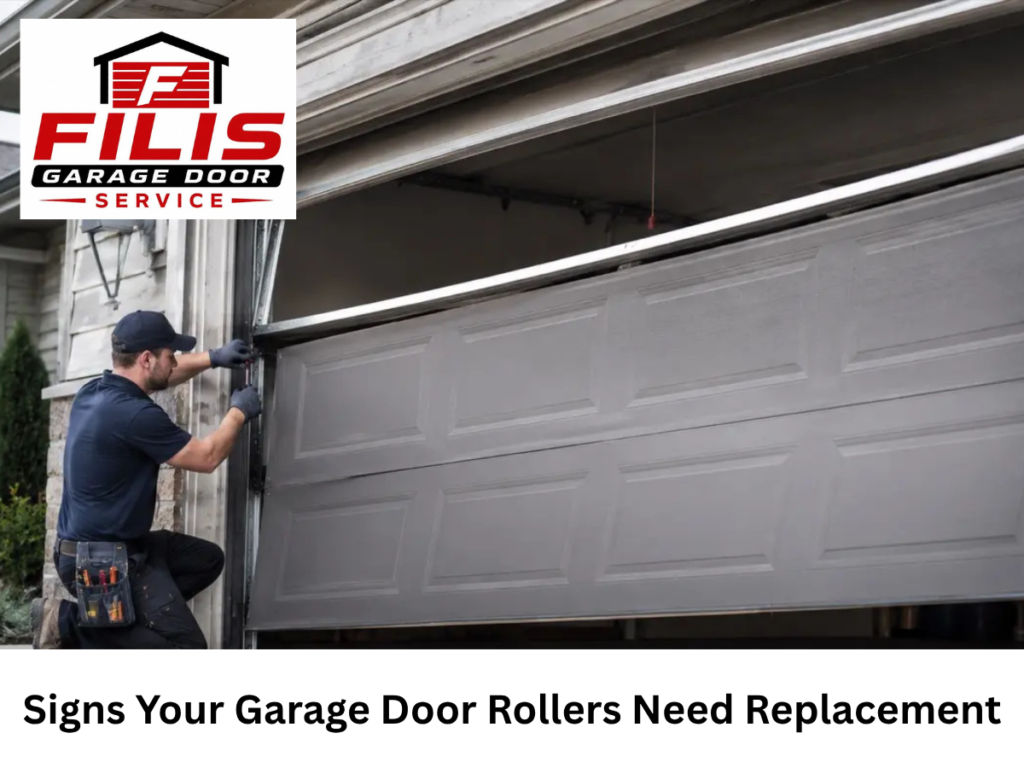
A garage door should travel along its tracks in a steady and controlled manner. If one side moves faster than the other or the door appears to shake as it travels, the rollers may be worn or damaged.
Uneven movement can also be caused by problems with the tracks, cables, springs, or other components. That is why it is important not to assume that rollers are always the cause.
If you notice the door moving unevenly, stop using it repeatedly until the cause is identified. Continuing to operate a damaged garage door can place additional stress on other parts.
The Garage Door Shakes or Vibrates
Excessive shaking or vibration is another warning sign. A garage door may vibrate when a roller has developed a flat spot, cracked surface, or bearing problem.
You may notice the shaking more clearly when the door moves through certain sections of the track. In some cases, the door may appear to move normally at first and then shake as it reaches a particular point.
This should not be ignored. A technician can inspect the rollers, tracks, hinges, and other components to determine what is causing the movement.
Visible Wear or Damage
Sometimes the problem can be seen without operating the garage door. Look at the rollers for obvious cracks, chips, flattened areas, rust, or other signs of deterioration. These issues may also be among the Signs Your Garage Door Opener Needs Repair, especially if worn rollers are putting extra strain on the opener.
Worn garage door rollers may have surfaces that no longer look smooth and round. Steel rollers may also develop rust, especially when exposed to moisture over long periods.
If a roller looks damaged, do not wait for it to fail completely. A damaged roller may eventually come out of the track and interfere with normal door operation, which can also place additional stress on the garage door opener.
The Door Becomes Difficult to Open or Close
A garage door that suddenly becomes harder to operate may have a problem with its rollers. When rollers do not move freely, the garage door opener may have to work harder to move the door.
You may hear the opener running while the door moves slowly or struggles through certain sections of the track. In some cases, the door may stop before reaching the fully open or closed position.
There can be several reasons for this behavior, including track problems, spring issues, opener problems, and damaged rollers. A professional inspection can help identify the actual cause.
The Door Gets Stuck
A roller that is badly damaged or has stopped moving properly can cause the garage door to stick. You may notice that the door stops at the same location each time it is opened or closed.
Do not force a stuck garage door. Applying extra force can damage the opener, tracks, panels, or other components.
If the door repeatedly gets stuck, contact a qualified garage door technician. The technician can inspect the complete system and determine whether the rollers need attention.
What Causes Garage Door Rollers to Wear Out?
Garage door rollers do not last forever. Several factors can affect their condition and lifespan.
Frequent Use
Every time you open or close the garage door, the rollers move through the tracks. Frequent daily use means more movement and more wear.
A garage door used multiple times a day may require more frequent inspection than one that is opened only occasionally.
Dirt and Debris
Dust, dirt, and other debris can accumulate around garage door tracks and moving components. This buildup can interfere with smooth movement and increase friction.
Keeping the garage door area reasonably clean can help reduce unnecessary wear. However, avoid using excessive force or attempting to adjust the tracks yourself.
Moisture and Rust
Moisture can be especially hard on steel rollers and other metal components. Rust can affect the roller surface and bearings, making movement less smooth.
Homes in areas with high humidity or frequent rain may need to pay closer attention to signs of corrosion.
Poor Maintenance
Garage doors contain several moving components that benefit from regular inspection and maintenance. Ignoring small changes in operation can allow minor wear to develop into a larger problem.
If your garage door starts making new noises or moving differently, having it inspected early can help prevent further damage.
When Should You Replace Garage Door Rollers?
There is no single replacement schedule that applies to every garage door. Roller lifespan depends on the roller material, quality, usage, maintenance, and environmental conditions.
Instead of replacing rollers based only on age, homeowners should look at their condition and performance. If the rollers are noisy, damaged, cracked, rusty, or no longer moving smoothly, replacement may be appropriate.
Nylon Rollers
Nylon rollers are often chosen because they can provide quieter operation. Over time, the nylon surface can wear down or become damaged.
If a nylon roller develops cracks or no longer travels smoothly through the track, it may need to be replaced.
Steel Rollers
Steel rollers are strong and can handle regular use, but they may produce more noise than some other roller types. They can also develop rust when exposed to moisture.
A damaged or heavily corroded steel roller should be inspected by a professional.
Ball Bearing Rollers
Ball bearing rollers are designed to provide smoother movement and can be found in different garage door systems. When the bearings begin to fail, the roller may become noisy or difficult to move.
A technician can determine whether the roller can continue to be used safely or should be replaced.
Why Prompt Roller Replacement Matters
Replacing a damaged roller may seem like a small maintenance task, but rollers are part of a larger system. A problem with one component can affect other parts of the garage door.
For example, a roller that does not move correctly can place additional strain on the tracks and opener. Over time, this may contribute to uneven movement and additional wear.
Damaged garage door rollers can also create safety concerns. A garage door is heavy, and problems with its moving components should not be ignored.
When several rollers are worn at the same time, replacing them together may provide more consistent movement than replacing only one. A professional can recommend the best approach after inspecting the system.
Can You Replace Garage Door Rollers Yourself?
Some homeowners may consider replacing rollers as a do it yourself project. However, garage doors contain springs, cables, tracks, and other components that can hold significant tension.
Working around these components without proper training can result in serious injury or damage to the door. The risk can be greater if the roller is located near a high tension component.
For this reason, homeowners should use caution when attempting any garage door repair. Simple visual inspections are generally easier to perform, but repairs and component replacement should be handled by a qualified professional when they involve safety risks.
A professional can also inspect the complete system instead of focusing only on the roller. This is important because a noisy or uneven door may have more than one underlying problem.
How to Protect Your Garage Door Rollers
Regular care can help reduce unnecessary wear and keep the garage door operating smoothly.
Inspect the rollers periodically for visible cracks, rust, chips, or unusual wear. Listen for changes in the sound of the door and watch for uneven movement.
Keep the garage door tracks free from obvious dirt and debris. Do not bend, remove, or adjust tracks unless you have the proper training.
Follow the maintenance recommendations for your specific garage door system. If lubrication is appropriate for the components in your system, use the product recommended by the manufacturer or a qualified technician.
Most importantly, address unusual sounds or movement early. Waiting until a roller completely fails can create additional problems.
When to Call Filis Garage Door
Not every noisy garage door has a roller problem. The source could be the tracks, hinges, springs, opener, or another component. A professional inspection is the best way to determine the cause.
Filis Garage Door can inspect the condition of your rollers and other garage door components. If the rollers are worn or damaged, a technician can explain the available options and help determine whether you need garage door roller replacement.
If you are unsure whether to replace garage door rollers individually or address several rollers at once, professional advice can help you make a safer and more practical decision.
Conclusion
Garage door rollers may be small, but they have an important role in keeping your garage door moving properly. Loud operation, shaking, uneven movement, visible wear, difficulty opening, and sticking can all indicate that the rollers need attention.
Regular inspection can help you catch these warning signs before they become larger problems. If the rollers are cracked, heavily worn, rusty, or no longer moving smoothly, replacing them may improve the performance and reliability of your garage door.
Do not ignore unusual changes in the way your garage door operates. If you suspect that your rollers are worn or damaged, contact Filis Garage Door for a professional inspection. Getting the problem checked early can help protect your garage door system and keep it operating safely.
Frequently Asked Questions
How often should garage door rollers be replaced?
There is no fixed replacement schedule because roller lifespan depends on material, quality, usage, maintenance, and environmental conditions. They should be inspected regularly and replaced when they show significant wear or damage.
What are the most common signs of bad garage door rollers?
Common signs include excessive noise, shaking, uneven movement, visible damage, difficulty opening or closing, and the door getting stuck during operation.
Can worn rollers damage my garage door?
Yes. Worn rollers may cause uneven movement and place additional stress on tracks, hinges, panels, and the opener. Addressing roller problems early can help reduce the risk of additional damage.
Are nylon garage door rollers better than steel rollers?
Both types have advantages. Nylon rollers are often preferred for quieter operation, while steel rollers can provide strength and durability. The best choice depends on your garage door and specific needs.
How much does garage door roller replacement cost?
The cost varies depending on the number and type of rollers, the condition of the garage door, labor, and other factors. A professional inspection and estimate can provide a more accurate cost for your particular system.