
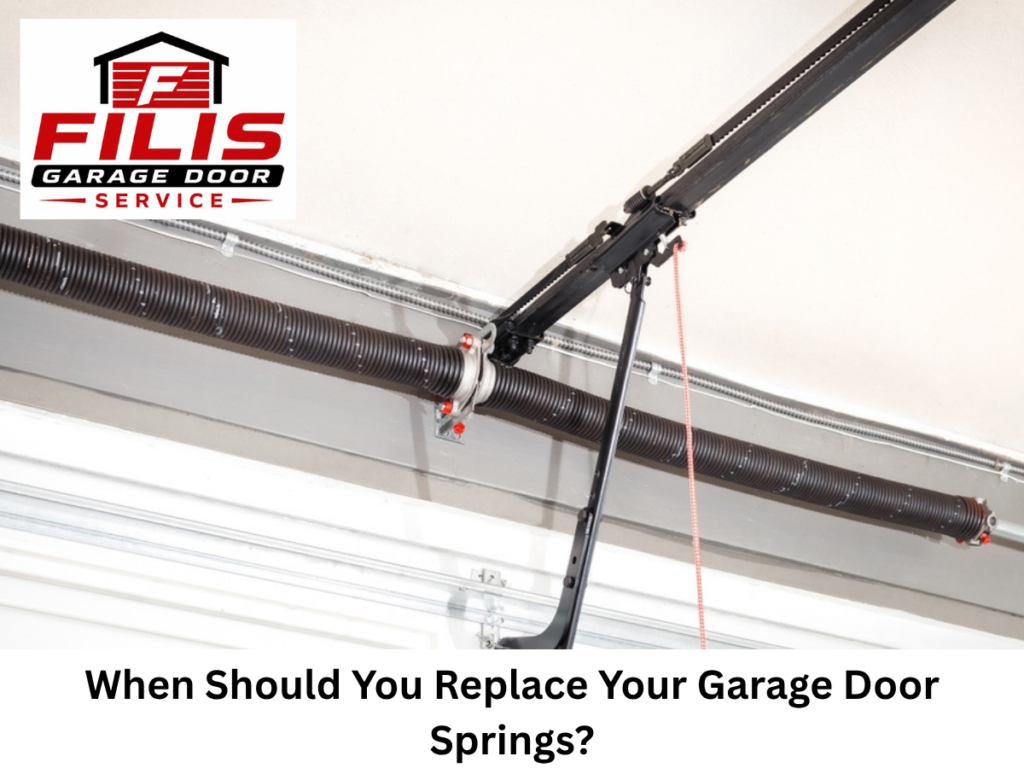
Garage door springs play a major role in helping your garage door open and close safely. They carry much of the door’s weight, allowing the opener and other components to work properly. Because springs are under significant tension, they can wear out over time and eventually break.
Knowing when to replace garage door springs can help prevent unexpected problems, property damage, and potential safety concerns. A garage door that suddenly becomes difficult to open, makes unusual sounds, or refuses to stay in position may be showing signs that its springs need attention.
For homeowners in the United States, regular inspection and timely repair can make a noticeable difference in garage door performance. Whether your door uses extension springs or torsion springs, understanding the warning signs can help you decide when professional service is needed.
How Long Do Garage Door Springs Usually Last?
Garage door springs do not last forever. Their lifespan is generally measured in cycles rather than years. One cycle means the garage door opens and closes once. Garage door springs typically wear out gradually with regular use, so understanding their expected lifespan can help homeowners plan for maintenance and repairs.
Many standard garage door springs are rated for approximately 10,000 cycles. If a household opens and closes its garage door four times each day, a 10,000 cycle spring could theoretically last around seven years. However, actual service life can vary depending on the spring, door weight, weather conditions, maintenance, and frequency of use.
Some higher quality springs are designed for 20,000 or even 50,000 cycles. These springs can last considerably longer when properly installed and maintained. If you notice signs of worn garage door springs, such as difficulty opening the door, unusual noises, or uneven movement, it may be time to have the system inspected by a professional.
What Affects Spring Lifespan?
Several factors can influence how quickly garage door springs wear out. A family that uses its garage several times a day will put more cycles on the springs than a household that rarely uses the garage.
Temperature changes can also affect metal components. In areas with significant seasonal changes, repeated expansion and contraction may contribute to wear. Rust and corrosion can further weaken the springs.
The weight and balance of the garage door matter as well. If the door is heavier than the springs are designed to handle, the springs may wear faster. Poor installation or incorrect spring sizing can also reduce their service life.
Signs Your Garage Door Springs Need Replacement
A broken spring is not always difficult to identify. In some cases, the spring may visibly break into two pieces. Other times, the warning signs develop gradually.
Paying attention to changes in your garage door’s operation can help you catch a problem before the spring fails completely.
The Garage Door Feels Very Heavy
One of the most common signs of a spring problem is a garage door that suddenly feels heavier than usual.
Garage door springs are designed to counterbalance much of the door’s weight. When a spring becomes weak or breaks, the door may become difficult to lift manually.
If you disconnect the automatic opener and the door feels unusually heavy, do not try to force it upward. A professional garage door technician should inspect the system.
The Door Will Not Open Properly
A broken spring can prevent the garage door from opening completely. You may hear the garage door opener running while the door barely moves or does not move at all.
In some situations, the opener may stop because it detects excessive resistance. Continuing to operate the opener when a spring is broken can place additional stress on the opener and other components.
You Hear a Loud Bang
A loud popping or banging sound coming from the garage can indicate that a spring has broken.
Torsion springs are under substantial tension. When one breaks, the release of that tension can create a sudden and surprisingly loud sound.
If you hear a loud bang and then notice that your garage door is not operating normally, inspect the door visually from a safe distance and contact a professional rather than attempting to handle the spring yourself.
There Is a Visible Gap in the Spring
Torsion springs normally form a continuous coil. If you notice a gap in the spring, it may be broken.
A broken spring can sometimes be identified by looking above the garage door. However, homeowners should avoid touching or adjusting the spring because it remains a potentially dangerous component even after it breaks.
The Garage Door Closes Too Quickly
A properly balanced garage door should move smoothly and remain relatively controlled during operation.
If the door suddenly drops faster than normal or becomes difficult to control, the springs may no longer be providing the required counterbalance.
This problem should be addressed promptly because an improperly balanced garage door can create additional wear and increase the risk of damage.
Should You Repair or Replace Garage Door Springs?
The answer depends on the condition of the spring and the overall garage door system.
In many cases, a broken or severely worn spring should be replaced rather than repaired. Springs are designed to work as tension or counterbalance components, and once the metal fhas reached the end of its useful life, repairing the damaged section is generally not a reliable solution.
Why Professional Replacement Matters
Garage door springs store a large amount of energy. Attempting to remove, adjust, or replace them without the proper tools and experience can result in serious injury.
Professional technicians understand how to identify the correct spring size, type, and tension for a particular garage door. They can also inspect related components to determine whether another issue contributed to the spring failure.
For homeowners who need Garage Door Springs Repair & Replacement, working with an experienced local garage door company can provide a safer way to restore proper operation.
Filis Garage Door Services can help homeowners address garage door spring problems and determine whether repair or replacement is appropriate for their system. A professional inspection can also identify related problems before they lead to a larger repair.
Why You Should Not Ignore Worn Garage Door Springs
It can be tempting to continue using a garage door when it still works. However, a weak spring may eventually fail without much warning.
Continuing to operate a garage door with a damaged spring can place additional strain on the opener. The opener is designed to move a properly balanced door, not compensate for a failed spring.
Additional Wear on Other Components
A garage door is made up of several interconnected components, including springs, rollers, tracks, cables, drums, hinges, and an opener.
When one component is not functioning correctly, other parts may have to work harder. A failing spring can therefore contribute to premature wear in other areas.
Addressing a spring problem early may help prevent a relatively straightforward repair from becoming a more complicated garage door service.
Potential Safety Concerns
A garage door can weigh hundreds of pounds. Springs help control and balance that weight during operation.
If the spring system fails, the door may become difficult to lift or may move unpredictably. This is especially important for households where children, pets, vehicles, and frequently used walkways are located near the garage.
For this reason, homeowners should treat spring problems as an important maintenance issue rather than a minor inconvenience.
How to Extend the Life of Your Garage Door Springs
Although no spring lasts forever, proper garage door maintenance can help support longer and more reliable service.
Keep the Garage Door Balanced
A properly balanced garage door places the appropriate amount of load on the spring system.
If your door becomes difficult to lift manually or does not remain in position when operated correctly, it may need professional adjustment or inspection.
Do not attempt to adjust the spring tension yourself. This is a job best left to a trained garage door technician.
Schedule Regular Inspections
Regular inspections can help identify corrosion, unusual wear, damaged cables, roller problems, and other issues before they become major failures.
A professional can examine the entire garage door system rather than focusing only on the spring.
Listen for Changes
Homeowners often notice garage door problems through sound before they notice them visually.
Grinding, squeaking, popping, scraping, or unusual rattling may indicate that something needs attention. While not every unusual sound is caused by the springs, a change in the way your garage door sounds is worth investigating.
Avoid Overloading the Door
Adding excessive weight to a garage door can place unnecessary stress on the springs and opener.
If you install insulation, decorative materials, windows, or other additions that significantly change the door’s weight, have the system inspected to ensure that the springs and opener remain properly matched to the door.
When Is the Best Time to Replace Garage Door Springs?
There is no universal replacement date that applies to every garage door. Instead, replacement should be based on the spring’s condition, cycle rating, usage, and performance.
If your springs are approaching their expected cycle life and showing signs of wear, scheduling an inspection can help you make an informed decision.
You should also consider replacement when the spring has visible damage, has broken, shows significant corrosion, or is no longer properly balancing the door.
Replace Both Springs or Only One?
Many garage doors use two springs. If one spring breaks, homeowners often wonder whether both should be replaced.
When two springs are the same age and have experienced the same number of cycles, replacing both may be worth considering. If only one is replaced, the older spring may fail later, requiring another service visit.
However, the correct approach depends on the specific garage door and spring system. A qualified technician can inspect both springs and recommend the appropriate solution.
What to Do If Your Garage Door Spring Breaks
If you believe a garage door spring has broken, avoid trying to repair it yourself.
First, keep children and pets away from the garage door. Do not attempt to manually force the door open or closed if it feels unusually heavy.
If your vehicle is trapped inside the garage, contact a professional garage door service for assistance. A technician can assess the spring system, inspect the door and opener, and determine what needs to be repaired or replaced.
If you notice a broken spring but the garage door is closed, leave it in that position until it can be professionally inspected whenever possible.
Conclusion
Garage door springs are essential components that help your door operate safely and smoothly. While their lifespan can vary, knowing the warning signs can help you address problems before a complete failure occurs.
A heavy garage door, unusual noises, a visible gap in the spring, difficulty opening, or sudden changes in operation are all reasons to have the system inspected. Because garage door springs are under significant tension, replacement and adjustment should be handled by an experienced professional.
If your garage door springs are showing signs of wear or have already failed, Filis Garage Door can help you determine the appropriate next step. Professional Garage Door Springs Repair & Replacement can restore proper balance and operation while helping protect the other components of your garage door system.
Frequently Asked Questions
How often should garage door springs be replaced?
There is no fixed replacement schedule. Many standard springs are rated for around 10,000 cycles, but actual lifespan depends on usage, spring quality, door weight, installation, and maintenance.
How do I know if my garage door spring is broken?
Common signs include a visible gap in the spring, a loud bang from the garage, a very heavy door, difficulty opening the door, or an opener that runs without moving the door properly.
Can I replace a garage door spring myself?
Spring replacement is not recommended as a do it yourself project. Garage door springs store significant energy and can cause serious injuries if handled incorrectly. Professional replacement is the safer option.
Should both garage door springs be replaced at the same time?
If a garage door has two springs of similar age and one fails, replacing both may be practical because the second spring may also be near the end of its service life. A professional inspection can determine whether both need replacement.
How much does a garage door spring replacement cost?
The cost varies based on the spring type, door size, spring rating, labor, and local service rates. The best way to determine the cost is to have the garage door professionally inspected and receive a clear estimate.